
Data
What 4,812 abandoned-cart conversations taught us
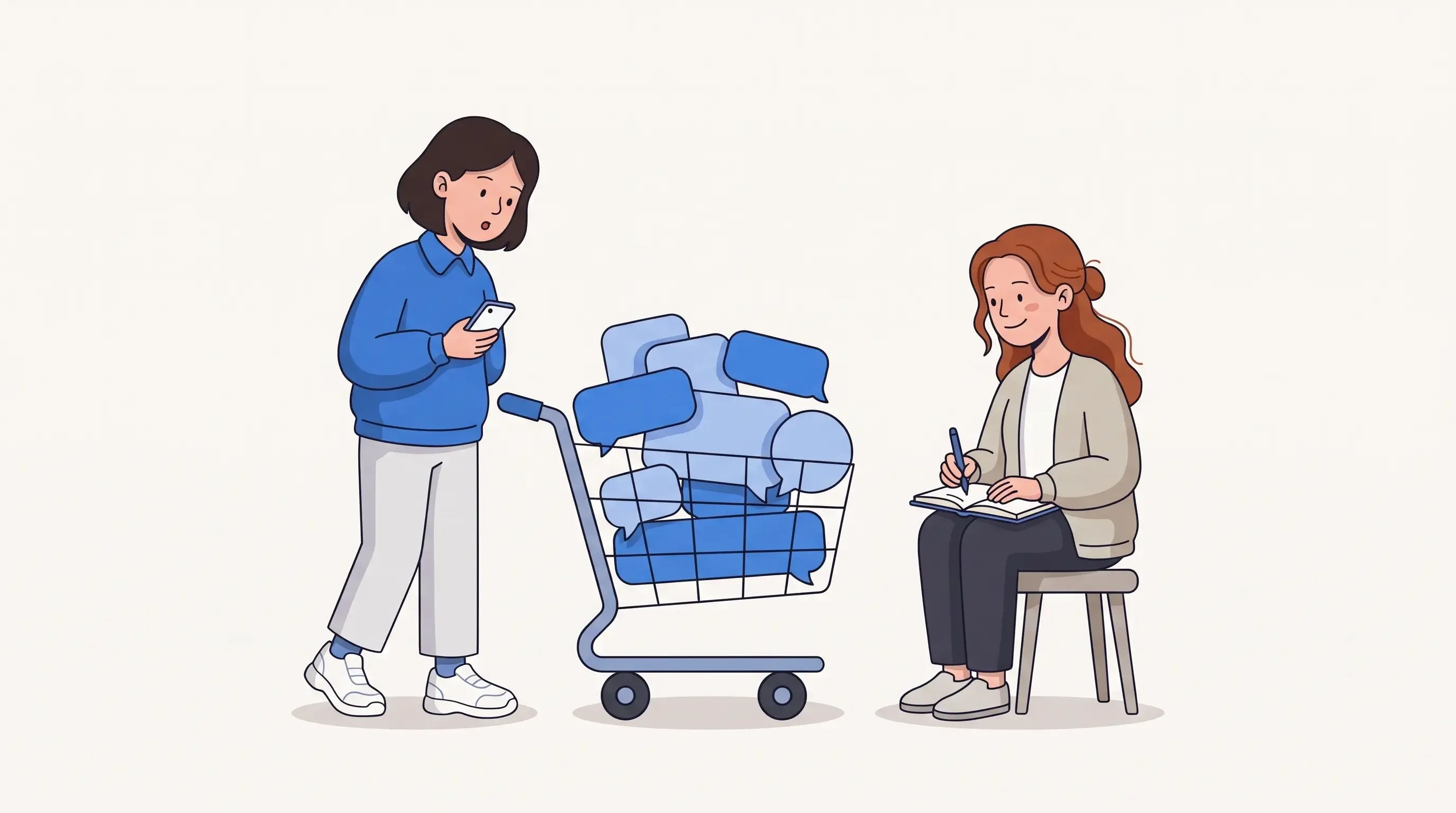
The short version
Across 4,812 abandoned-cart openers in 30 days, 1,838 customers wrote back. That is a 38.2% reply rate. Those conversations led to 312 orders, and fewer than 1% of customers opted out. The pattern behind those numbers is simple: a question gets answered, a sales pitch gets ignored.
1. A question earns the reply
Every opener asked one thing and carried no link:
- hey Dev, it’s Mia, Venom Scents’ text assistant. saw the 3-pack in your cart. anything i can help with?
People answer questions. They told us what stopped them in their own words, which is something a “you left something behind” email never finds out.
2. Price is a reason, not the only reason
Some customers said price. Many didn’t. The other answers came up again and again:
- Shipping. “is the shipping slow?” or “will it get here by saturday?”
- Fit or feel. “is it strong? my place is tiny” or “which one is lighter?”
- Not sure yet. “just looking”, which deserves a friendly “no rush” and nothing more.
When the answer wasn’t price, a discount was the wrong reply. A straight answer from the store’s own policies and product pages did the work:
- 3-5 business days, free over $75. your cart’s at $92 so it ships free. want the link back?
3. When it is price, start small
When price was the reason, the assistant offered the brand’s first step, usually 10%. It went to the brand’s cap only if the customer still hesitated, and only once. Every code was single use and expired.
A ladder finds the smallest nudge that works. Leading with your biggest discount gives margin away to people who didn’t need it.
4. Speed matters after the reply, not before
The first text goes out about an hour after the cart is left, inside quiet hours. There is one gentle follow-up after a day of silence, then nothing. What made a difference was what happened after the customer replied: a fast, specific answer. In the story we tell most, the order landed 14 minutes after the first text.
5. Knowing when not to answer
Some questions can’t be answered from store data: a delivery promise for a specific day, a custom request, a complaint. In those cases the assistant didn’t guess. It told the customer it was checking with the team and handed the conversation over. A teammate replied, and the assistant picked back up afterwards.
Those handoffs were a small share of conversations, but they were where a guessed answer would have done the most damage.
6. Respect keeps opt-outs low
Fewer than 1% opted out. We think that comes down to a few habits:
- Only customers with a recorded opt-in are texted.
- Nothing goes out at night in the customer’s timezone.
- One question at a time, no stream of messages.
- Any opt-out wording counts, gets one confirmation, then silence.
What we changed because of it
We now treat “what stopped you?” as the core of the flow, not a warm-up before a coupon. We pull more shipping and product facts into each brand profile during onboarding, because those answers often did the work a code would otherwise have done. And we keep reading the conversations every week.